Palio de Siena
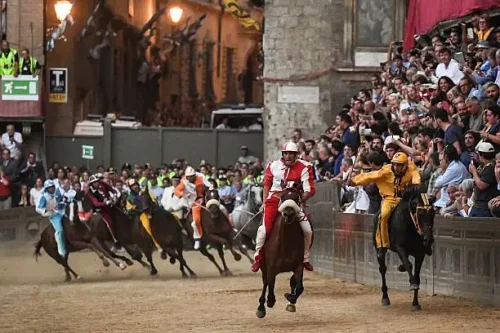
Ciao Fans if Italy, Yes, today is another post about historical traditions in Tuscany…August 16th…the ‘Palio de Siena’: A glorious, beautiful, historically significant circus of absolute chaos! (But before I start, I thought it only fair that when I do a post on what some might view to be a boring lesson in Italian history, I should at least share one of my recipes with you, so if you go to my Blog you will find one for a Lemon, Pistachio and EVO Torte that is great with your morning Cappuccino or with a scoop of gelato for dessert.) It is one of Italy’s oldest and most beloved traditions…a twice yearly horse race dating back to the Middle Ages, fun in the Piazza del Campo, a public square that looks like a Renaissance painting but behaves like a gladiator arena. It began as a way for Siena’s neighborhood clans to show off civic pride, military readiness, and general swagger. Today, it’s still about pride and tradition, but also about bragging rights, questionable strategy, and horses who have no idea why everyone is screaming. The different clans, called ‘contrades’ spend months preparing elaborate pageantry, parades, blessings and strategy sessions. It’s all very solemn and ceremonial until the moment the horses line up…and then it becomes a mediaeval version of ‘Mario Kart’ but with real consequences. The race itself is only 90 seconds but it’s pure, unfiltered mayhem. The track is a tight, sandy loop around the piazza’s sloping edges, causing horses to skid, jockeys fly, crowds roar, and somewhere kin the chaos a victor emerges. The horses start from a standstill but not in gates…they’re lined up between two ropes, which is basically the horse version of ‘good luck brother.’ The jockeys ride bareback because apparently stirrups are for candy asses and people who don’t appreciate danger. They are allowed to ‘interfere’ with each other which is a polite way of saying they can whip the s**t out of the other guy. A horse can even win the race if his jockey falls off, which happens often. Siena is the only place where a riderless horse is celebrated like a conquering hero. Why both we and the Italians love it? Because it is magnificently whacky…I can’t think of any tradition like it that we have in this country…at least one that garners national attention like the Palio does. It’s absurd, beautiful, chaotic, ancient, emotional, dangerous, poetic and ridiculous….and it’s Siena. Gotta love the Italians…I do… David & Valentino
Saint Lawrence
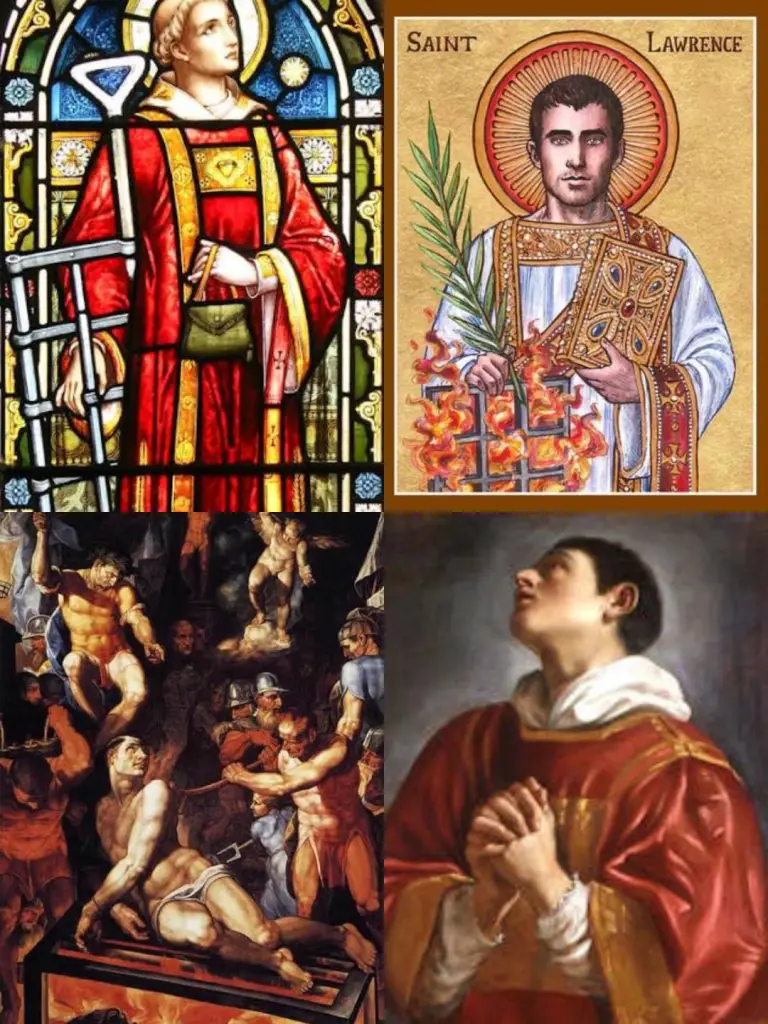
Hello Friends and Lovers of all things Italian, I love learning about the annual traditions and celebrations in Italy and I want to share a story about one of the most well-known Italian Saints and one, for reasons which will soon become evident, is a favorite. He is celebrated and feasted throughout Italy today, August 10theach year and in doing my research on him I immediately felt a kinship and wanted to take the liberty to share my modern-day interpretation of how he became a Saint. That said, know in advance that his may not be one of the most exciting posts that I have recently written. Long before San Juan Capistrano had bells or swallows or adobe walls warming in the sun, Rome was a city of marble and menace. And in that city lived Lawrence, a deacon with a grin that always seems a little too wide for someone serving under an emperor known for torching Christians like lanterns. He was a 3rd‑century Christian deacon and martyr. He’s one of the most beloved saints in Catholic tradition, known for his courage, his devotion to the poor, and the dramatic story of his death. San Lorenzo (Saint Lawrence) is the patron saint of cooks, chefs, the poor and firefighters. Lawrence had a reputation: he fed the poor, joked with the soldiers, and had a habit of turning every solemn moment into something gently irreverent. One summer evening, Emperor Valerian summoned him and said “Deacon, I want you to collect the treasures of the Church, meaning the money, and bring them to me by sunrise.” Lawrence bowed and all night he walked the alleys of Rome…past bakers closing their shutters, past taverns spilling laughter, past families huddled in their doorways. He gathered the blind, the widowed, the crippled and the hungry…people who had nothing except each other. At dawn, he marched them into the Emperor’s courtyard. Valerian demanded “Where are the treasures?” Lawrence swept his arm toward the crowd and said ‘Here…these are the treasures of the Church.” For this act of holy defiance, he was sentenced to death by gridiron. A great iron grate was heated until it glowed like the sun and then Lawrence was laid upon it. And here is part of the legend that makes him unforgettable: As the fire roared and the soldiers wiped the sweat from their brows, Lawrence lifted his head, winked, and said “Turn me over…I’m done on this side.” His grisly death by fire links him to the kitchen, particularly those who use grills and he is considered the protector against fire. He must have been one brave and bad ass dude with a wicked sense of humor. He is frequently depicted holding a grill grate, representing his method of execution. The Basilica of San Lorenzo Fuori le Mura is one of the 7 major pilgrimage churches in Rome, built over his burial site. His celebration is a feast day often marked by grilling steaks ala the famous ‘Bistecca Fiorentina’. The night of August 10th is known in Italy as La Notte de San Lorenzo often associated with the Perseid meteor shower, considered to be the sparks from his martyrdom. This annual celestial event peaks around August 12-13 with up to 100 bright ‘shooting stars’ per hour. In terms of celebrations, because San Lorenzo was martyred on a gridiron, fire becomes the symbolic heart of the feast. center around solemn religious services, neighborhood street festivals, and stargazing traditions. Major events in Rome include masses at the Basilica of St. Lawrence Outside the Walls, local food markets, and public viewings of the saint’s relics including pieces of the gridiron he was executed on and pieces of his skull…whoa! Grilling is central — especially in Tuscany, where people cook ‘Bistecca Fiorentina’ or other grilled meats as a nod to the grill. However, in Naples and Bologna, some communities abstain from meat out of respect for the martyr, serving grilled watermelon “steaks” instead…..not sure that’s such a great idea…cauliflower or broccoli steak makes a little more sense to me. In his honor, I’ll be grilling a large porter house outside tonight with some rosemary roasted potatoes and some summer corn. Happy celebrations to all you followers… David & Tino
Funghi & Tartufo
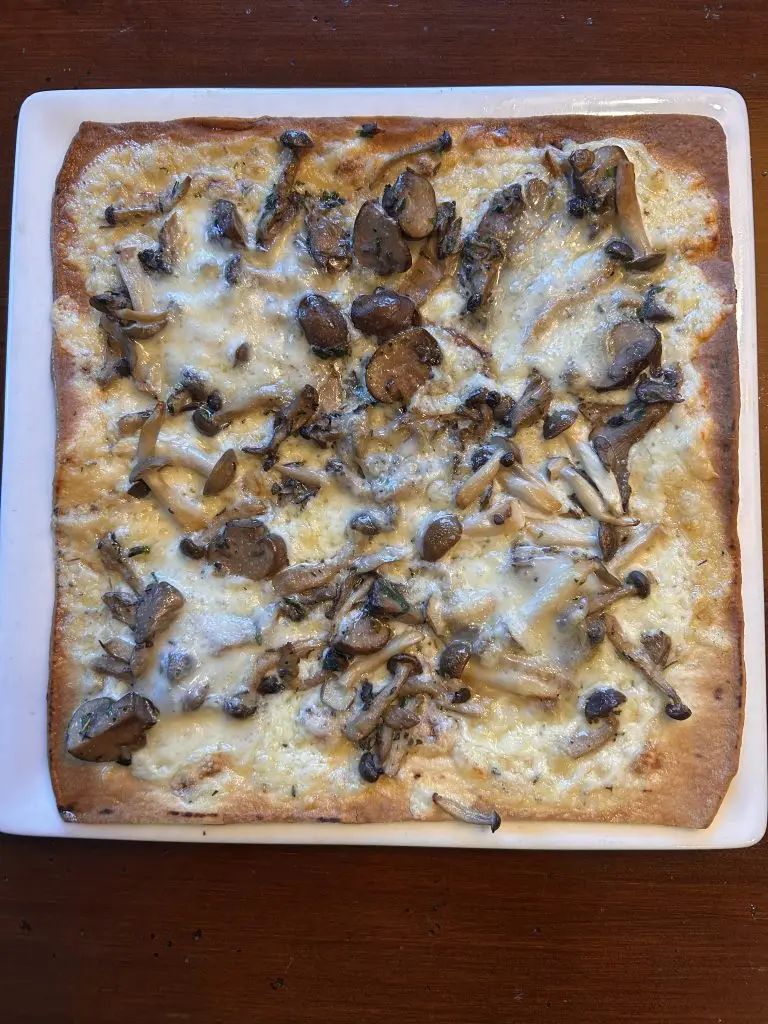
Good morning foodie friends….today is about ‘Funghi & Tartufo’. I’m a lover of mushrooms and truffles and this month at TATM I’m introducing one of my favorite flatbreads with one of my favorite Italian cheeses….Taleggio….friends, this is just one sexy cheese. Whenever I prepare mushrooms, it reminds me of the several years I lived up in the redwood forests of Boulder Creek in Northern California. Even in the summer the air was filled with a mossy scent where wild ferns grew everywhere beneath the canopy of the sun-blocking trees. We lived in a little red shingled house on a large lot with a stream running behind it. The property was overgrown with wild blackberries and Peruvian lilies that would sprout up every spring. I was working as a line cook for the very first time at a little French restaurant in Saratoga called Le Mouton Noir. It was owned by a very nice couple who were passionate about French food and we made absolutely everything from scratch. I guess they were pleased with my work and enthusiasm because they bought me my first Cuisinart, something I couldn’t afford back then. We didn’t have much money….Gallo Hearty Burgundy was our go-to wine at home, but we ate well mainly hearty soups and stews that I prepared. I remember the first two things I made with my shiny new Cuisinart was a frozen wild blackberry souffle made with the ones from our yard and a pork & duck pate…I was hooked on my new toy. Anyway, I digress….back to the mushrooms. When preparing them I often start by slow roasting them with shallots and fresh thyme which concentrates the flavor creating caramelized edges, tender centers…a little forest floor mystery if you will. They bring both an earthiness and elegance, like a floating whisper from a mossy hillside after a rain. Next, the Taleggio is introduced, which is one of the oldest soft cheeses in Italy originating back to the 9th century in the Val Taleggio valley of Lombardy. It is washed once a week with a seawater sponge to prevent mold growth and to form a very thin, edible orange or rose crust. Into a blazing hot oven, the flatbread goes until the edges are brown and crispy and the cheese works its magic. It doesn’t just melt…it oozes velvet richness, wrapping the mushrooms in a lush, decadent cloak. Out of the oven and ready for its final caress as white Truffle oil is drizzled across the top with its buttery aroma. A little wild and intoxicating as it threads through the Taleggio and mushrooms like a silk ribbon, tying everything together with pure indulgence. A flatbread like this doesn’t just feed you…it seduces you. You’re Welcome… David & Tino
Italian Autogrill
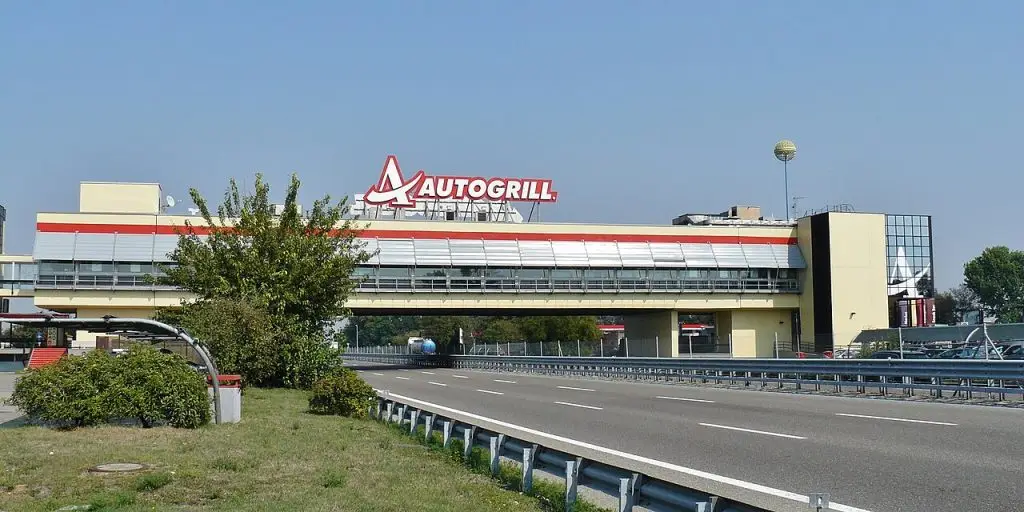
Hey Friends, So, I was re-watching one of Tucci’s episodes about Lombardy and there were two parts that peaked my interest. (It seems like every time I rewatch them, I catch something that I didn’t see before) The first was about a Michelin starred restaurant that grew all of it’s own produce year round, which started me thinking…is seasonal cooking becoming extinct?…but I’ll save this for another post. The second part of the episode was about the Italian AutoGrills which are the roadside restaurants lining the Autostradas and I started thinking about, once again, how different the Italians view travel and food….and the food that they eat when they travel. So I did a little research and uncovered some really cool stuff. AutoGrills aren’t just rest stops…they’re a whole quirky, deeply Italian cultural institution. They began as tiny post-war pastry kiosks in the late 1940’s. The very first one wasn’t a modern rest stop at all…it was a humble kiosk owned by Mario Pavesi, a Lombard baker’s son, on the Milan-Turn highway where he sold cookies and coffee to truck drivers. This tiny stand became the side of Italy’s entire highway dining culture. In 1959 Pavesi invented the ‘bridge-restaurant’ Autogrill which was suspended over the road…a glass walled-bridge where diners could watch cars stream beneath them. My first thought was, were these the forerunners to American roadside restaurants? No, actually American rest stops (especially the orange-roofed Howard Johnson’s) came first. Pavesi and his architect traveled through the US highway system in the 1950’s and were struck by these ‘Oasis’ rest stops built as bridges over the highway. They returned to Italy and started designing and building their own highly visible, architecturally futuristic structures copying American-style foodservice to Italian tastes. A newculture of stopping, eating, and socializing on the road began to take place. This was a radical shift for postwar Italy as it transitioned form a largely agriculturally driven economy into modern, consumerism including the romance of travel. Another fun fact…in 1999 AutoGrill acquired Host Marriott Services, the dominant operator of US airport and highway concessions. These Autogrills introduced a more ambitious architectural approach, greater emphasis on food quality and a shift toward multi-concept food halls rather than single-chain diners. They now serve real regional food that actually shifts with the region. As an example, in Tuscany they serve wild boar (cinghiale) dishes…in Emilia-Romagna…Parma ham and Parmigiano..and everywhere proper espressos are served by trained baristas…they treat food as culture….not as convenience. In the Tucci episode he ordered Osso Bucco Milanese which was served to him in a matter of minutes because the pre-cooked and then froze the pasta taking only 30 minutes to reheat and serve. The whole veal shank wasn’t obviously served, rather it was a smaller version of tender braised beef placed in the center of the risotto in traditional fashion. Autogrill emerged from the merger of Motta, Pavesi, and Alemagna…three giants of mid-century Italian pastry and coffee culture. Their DNA shapes the Autogrill vibe today…espresso bars, pastries, panini, and a certain Milanese modernism. During the 1970’s oil crisis, all three of these founding companies struggled, but the Italian government intervened and saved them merging them into Autogrill S.p.A., preserving the highway dining network as a national travel infrastructure. Today, the Autogrill operates 625 high locations 147 airport outlets 162 train stations 94 city center shops It’s one of Italy’s most recognizable brands worldwide and the Italians love them. They now include charging stations for EV’s, sleek interiors, curated food halls, and even chef-driven restaurants like the one Tucci visited where they claimed the chef’s work 3 years to perfect his risotto dish! The Italians treat Autogrill as part of the joy of road-tripping. A pre-made panino, a quick espresso at the bar, a browse through regional snacks…it’s a ritual for them. They are a cultural time capsule of Italy’s post-war economic boom known as Italy’s “Miracolo economico Italiano”…their ‘economic miracle’. And now you know the whole story… Ciao Amici… David & Tino
Friends of Florence and Focaccia
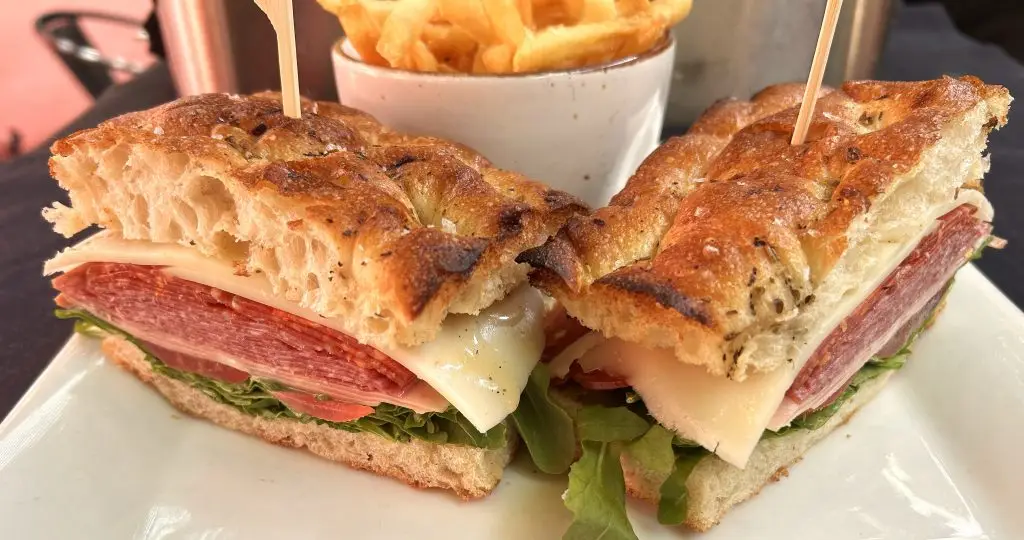
Hello Friends of Florence and Focaccia…. As the home and heart of the Renaissance, the innumerable number of artistic treasures that Florence has given the world are truly remarkable and the city has a way of making even the simplest things feel like ceremony. Nowhere is that truer than in the quiet holy act of eating a sandwich. For some time now she has been famous for being the birthplace of crispy golden Focaccia, hot out of the oven split open and overstuffed with Italian meats, cheeses and bold, exotic spreads…let’s take a quick visit to this magical place. When in the city, you find them not by looking, but following the perfume…warm olive oil, freshly cut rosemary, and the faint sweetness of dough that has spent the morning rising like a prayer…(oh yeah and then there’s the block long line on the street). I adore this city….it hums around you…scooters whining, church bells tossing their bronze voices across the Arno, tourists drifting back and forth like pollen blown in the wind. But the focaccia shops are like little sanctuaries…you step inside and the world softens. The special ‘Schiacciata’ version of focaccia is a Florentine love letter. The bread is golden, blistered, glazed with EVO and dusted with sea salt. It crackles when the knife enters, sighs with steam when opened, and then…’Oh hell to the yes’…there are the fillings. The current beauty queen favorite is a version with paper thin Mortadella draped like silk on a bed of Stracciatella, topped with a swallows nest of peppery arugula and finished with a drizzle of lemony pistachio pesto. Sofia, you say you want to add some truffle cream because you’ve heard so much about it but don’t know what it tastes like? “Sure thing Bella…how about the scent of a verdant forest floor after the rain?” No matter what version you order, every ingredient feels like it was chosen by someone who believes lunch should be a form of devotion. You carry your parchment-wrappedtreasure out into the street, still warm, still breathing. The Schiacciata leaves a mixture of crumbs, sea salt, and olive oil on your fingers. You take a bite and it reveals itself in layers…rustic and elegant all at once…like the city itself where Renaissance palaces stand beside laundry lines and stray cats sun themselves on marble steps. As you walk, eating, you realize that this is the kind of food that doesn’t just fill you…it slows you. It asks you to notice the way the sunlight hits the Duomo’s dome, the way the Arno curls like a ribbon, the way strangers laugh with their whole bodies. A focaccia sandwich in Florence is not a meal…it’s a gentle command…be here…taste this…remember that life can be simple but still magnificent. And this is why I am introducing these Florentine treasures to San Juan Capistrano. Each month at my Tavern at the Mission, I will be featuring one or more of these lunchtime beauties hoping that, like our’ Tucci Night ‘faithful, you will be able to enjoy a taste of Tuscany and all the foods that I have come to love. Ciao Bellas… David & Tino
Spaghetti Western
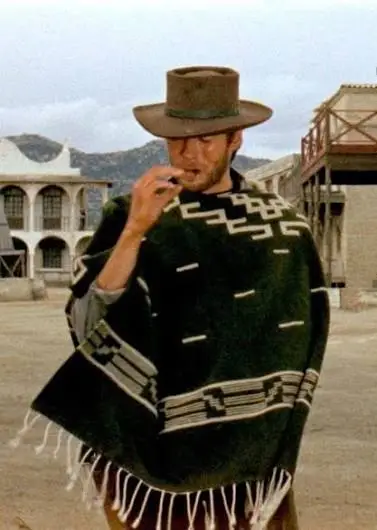
Hey Friends, At the start of each week, I so look forward to two of our special nights at TATM…’Cowboy Taco Tuesday’ and ‘Stanley Tucci Wednesday’. However, I must admit I am somewhat conflicted and caught between two worlds. Some days I swear, our valley tilts just enough to blur into Tuscany…(maybe it’s wishful thinking or just my cataract vision)…the light gets that honey-gold color, the hills breathe in slow waves and suddenly I’m not just a Chef & restaurant owner…I feel like I’m a character in a spaghetti western scored by my favorite composer Ennio Morricone himself. I’ll be walking past the Mission on the way to the restaurant and I feel that delicious tension between the two worlds I love. The Tuscan world of olive oil, slow afternoons and what the Italians call ‘dolce far niente’…the sweetness of doing nothing…and the cowboy world of dust, leather, and cast-iron cooking. I sometimes expect Clint Eastwood might step out from behind a Mission wall, squint at me, and tip his hat before ordering a plate of Pasta Carbonara to go while I hear the distant wail of a harmonica… ‘wah-wah-wahhhh’. San Juan Capistrano clearly still embraces its own frontier spirit…a place where horses prance past aged adobe walls, the air smells like mesquite and citrus, and where the valley still remembers the old vaqueros like we do at our Tumbleweed Bar. And yet, when in my home kitchen, I’m stirring risotto, shaving Parmigiano, and, with Tino by my side, coaxing my backyard rosemary into purple blooms. I’m basically Clint Eastwood if he traded his poncho for a black apron and a glass of Chianti. Two cultures…both rugged, both romantic, both shaped by land, hunger, passion, grit and grace. So yes….I’m caught in a spaghetti western…instead of gunfights, my showdowns happen in the kitchen. Tuscan herbs versus cowboy smoke, Chianti versus tequila, cast iron versus terracotta. I’m a guy with one foot in Tuscany and one boot in Capistrano. A guy who believes a hand-crafted bowl of pasta can be as heroic as a cowboy riding into the sunset. A guy who knows that the best stories and best meals can come from letting worlds collide and be shared…caught between two homelands: the rolling hills of Tuscany and the wide-open West of Capistrano… I think Morricone would have loved it. Honestly…I wouldn’t want it any other way…this valley is my film set…the restaurant is my saloon…and my life equal parts pasta and saddle leather make up my spaghetti western…and I’m proud to be its leading man. Ciao & Adios David….along with nominated best supporting cast member…Tino
French Onion Tomato Bisque
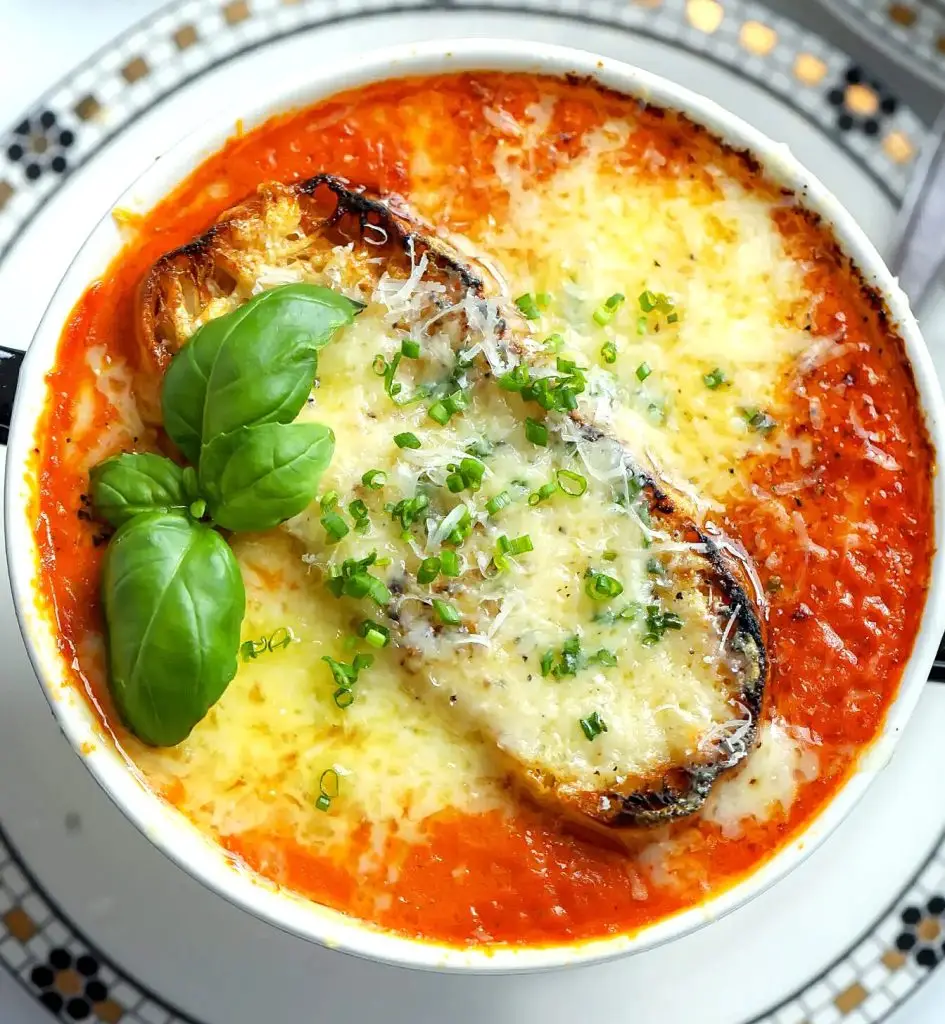
Hey Tomato People, With all this talk about summer heirloom tomatoes eaten simply drizzled with your favorite EVO, Modena Balsamic vinegar and sea salt or unmercifully thrown on the grill to make my signature salsa, there’s another dish that I like to make when heirlooms are at their best….’French Onion’ Tomato Bisque. Now, you may be thinking to yourself as I know Tino is, with all this crazy summer heat and humidity, how can anyone be thinking about making soup? Well, it’s because this version speaks to the rhythm of a real summer night…not the postcard version, but the lived-in one that you know if you’re living near the coast like I do in San Juan Capistrano…no matter how hot it gets during the day…the lack of clouds means the heat doesn’t get trapped in at night, resulting in a beautiful chilliness as the sun gently drops into the Pacific. In the dead heat of the day, heirloom tomatoes are at their loudest…sun-drunk, sweet and a little warm to the touch. Slowly caramelized French onion flavors don’t feel like they belong in July, but they do….just because summer isn’t just all about high noon. It’s also 9:00 or so at night on the patio, when the summer breezes remember how to move. It’s happening tonight as Tino and I sit outside, him with his nose in the air trying to search for just the right direction to catch the breeze face on and me enjoying a light summer supper soup delight. This soup makes sense because it’s comforting without the heaviness of its namesake….the tomatoes keeping it floral yet still blanketed in the coveted glaze of caramelized cheese that make it so well loved. No need to give you a recipe here…just toss them in olive oil with some onions and garlic, roast them for a bit, then blend them with some chicken or vegetable stock and fresh basil and season to taste. Pour into a crock, top with some crunchy bread and aged cheddar and broil until slightly melted. Garnish it with a fresh basil crown and some chives so you feel all ‘Chefy’ about it and enjoy. Be brave….go for it… David & Tino
Salsa Quemada
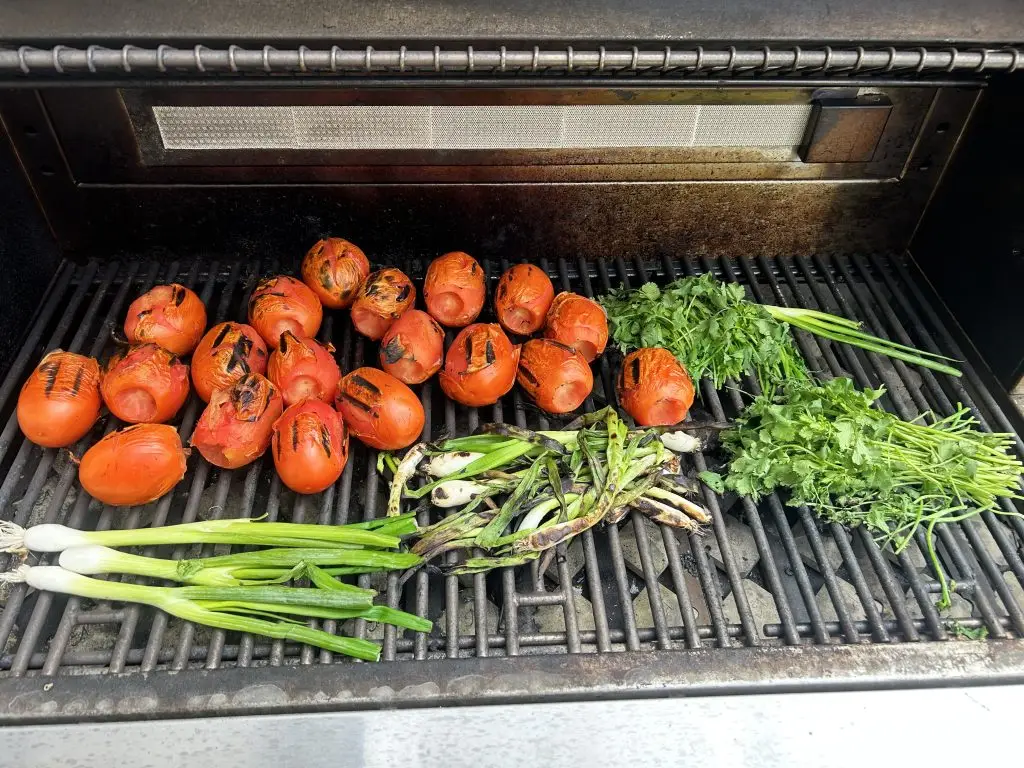
Good morning Friends, As you may recall, a few weeks ago, we introduced ‘Cowboy Taco Tuesday’ night at Tavern at the Mission along with a ‘burnt salsa’ that I developed years ago. It’s unique in that the tomatoes, scallions, chiles and cilantro are all grilled and charred, giving it an unusual flavor and appearance. No, this salsa is not going to win any beauty contest, but our guests are already loving it and have asked if I would consider providing the recipe for it which I have happily posted below. With all the summer grilling in swing right now, you can easily make this salsa start to finish in 30 minutes, however, it will taste much better the following day as all the flavors will meld and mature when refrigerated overnight. I hope you’ll give it a try…you’ll be glad you did… Happy Grilling! David & Tino
Chocolate Souffle
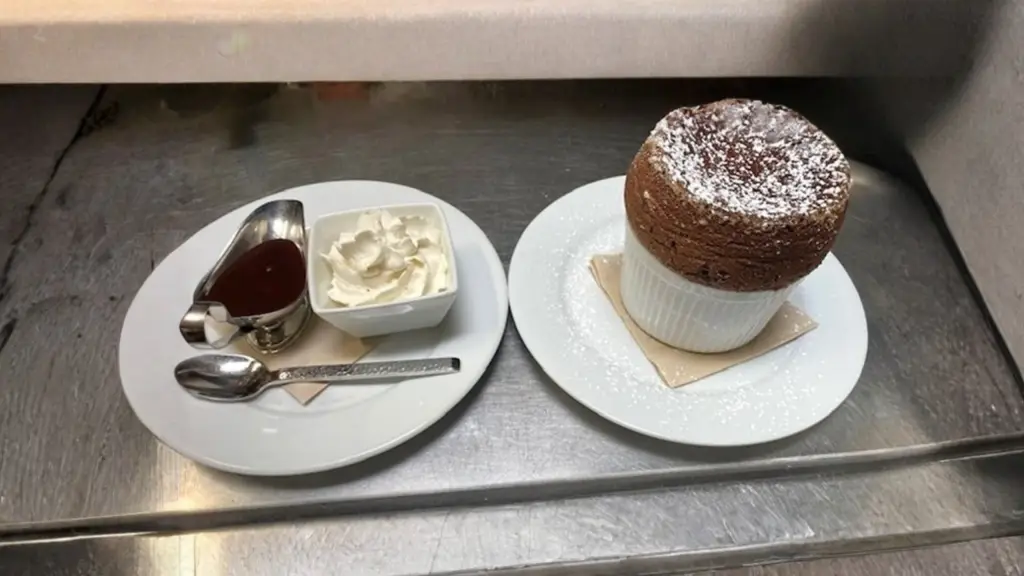
Hello again Foodie Friends, Well, it appears that a growing number of you are actually enjoying reading about the back stories behind the restaurants and foods that I’ve created over the past 5 decades. I’m more than a little pleased to hear this because I enjoy sharing these with those of you who are interested. I recently had a friend, who I had not seen in quite some time, (good to reconnect with you Paul) mentioned to me that I should write a book. Thinking that he meant a cookbook, my response was it’s a very deliberate and time-consuming process with all the recipes having to be tested and blah, blah, blah. His response was “No I mean writing a book telling the history behind all that you have created over the years.” I said that basically that’s what I’ve recently started to do on my Blog and invited him to log on. So here we go…this story is a rather, long and winding road but it’s for those who ask about my chocolate souffle, which I originally introduced at Bistro 201 in Irvine way back in June of 1990, re-introduced it at French 75 in Laguna Beach in 1998, and recently re-reintroduced at my Tavern House and Tavern at the Mission restaurants. The story really started when I was living in Boston working for the Copley Plaza Hotel back in the mid 70’s. It was during the time that they were bussing students and there was much racial unrest taking place in the city. I had beautiful walk-up apartment in a great neighborhood on just 2 blocks from the Boston Commons and the Ritz Carlton but within a period of 1 month I was held up while walking home from the hotel twice…once at gunpoint and once at knifepoint. I thought that perhaps God was trying to tell me something? One week later on a Friday afternoon when I came home early from work to find that my apartment had been broken into and half my belongings stolen, I then knew he was telling me something…it’s time to move. I had a really funny, crazy friend from college who lived on Balboa Island who had been bugging me about coming to visit and see what SoCal was all about so I finally decided to hop on a plane and check it out. He picked me up at what was then called just the Orange County Airport when it was just the coolest place. It had a little seafood restaurant on the second floor called Delaney’s where you could have great clam chowder, a glass of wine, and watch the planes taking off and landing (check out the photo), So, Jon said that the first thing he was going to introduce me to was a place on PCH not far away called the ‘Date Shack’ where I had my first, iconic date shake…it was awesome….(btw…not a word I used to describe it then because this was before it was popularized by Anthony Spicoli). We then dropped off my bag at his place on Balboa and toured the area for the rest of the afternoon and into the evening taking the Ferry over to the peninsula to enjoy a Chili Cheese Dog at Charlie’s Chili and then finally finishing the night with a frozen banana at Dad’s. The following day Jon said he had to go to LA for a couple of days to show a property in the Hollywood Hills he was listing and asked if I wanted to come along…never having been to LA I was, of course, all in. We drove up the next morning and spent the night at his amazing listing. Sitting on a hillside complete with a gorgeous view of the LA lights, swimming pool and tennis court, I was beginning to understand the lure of the Hollywood Hills. Next morning we’re sitting in the kitchen having coffee when the doorbell rings. In walks the agent with no other but her client Gene Wilder. Now you have to remember that this was shortly after the release of ‘Blazing Saddles’ in which he played one of the leading roles as ‘The Waco Kid’ so, as a fan, I was starstruck. Having experienced many quite snobbish celebrities at Maxwell’s Plum, I was not sure what to expect but he was the nicest, most soft spoken, engaging guy…he made my day. BTW…Blazing Saddles was just named as the funniest movie of all time by American Film Institute. OK, by now you’re wondering, are you ever going to get to your f’ing chocolate souffle? Yes…I am. That night Jon said I’m taking you to The Bistro Garden, which is one of the most popular and iconic restaurants in Beverly Hills for one of the best desserts you’ve ever had….their Chocolate Souffle. I was beginning to establish a pattern here with him…Jon had a serious sweet tooth. Time for a little, but really fascinating, side bar here to give you some context about Jon and his lineage. His Dad was Al Jarvis, and without going into an explanation about him that could take quite some time, he was the man widely credited as inventing and becoming LA’s first true radio disc jockey and one of the architects of modern music broadcasting. He launched a revolutionary program in the mid 1930’s called ‘The Make-Believe Ballroom’…a show that played records continuously while Jarvis probed commentary, introductions, and personality driven banter…this format simply did not exist before. At a time when radio was dominated by live studio orchestras, he dared to build a show aroundrecorded music treating the studio like a glamorous imaginary dance hall. He spoke as if a live band were performing, creating an atmosphere that felt intimate, stylish, and brand new. This shift from live performance to curated recorded music became the foundation of what modern radio is today. Please excuse me here, because I’m off topic, but I want to go on
French 75
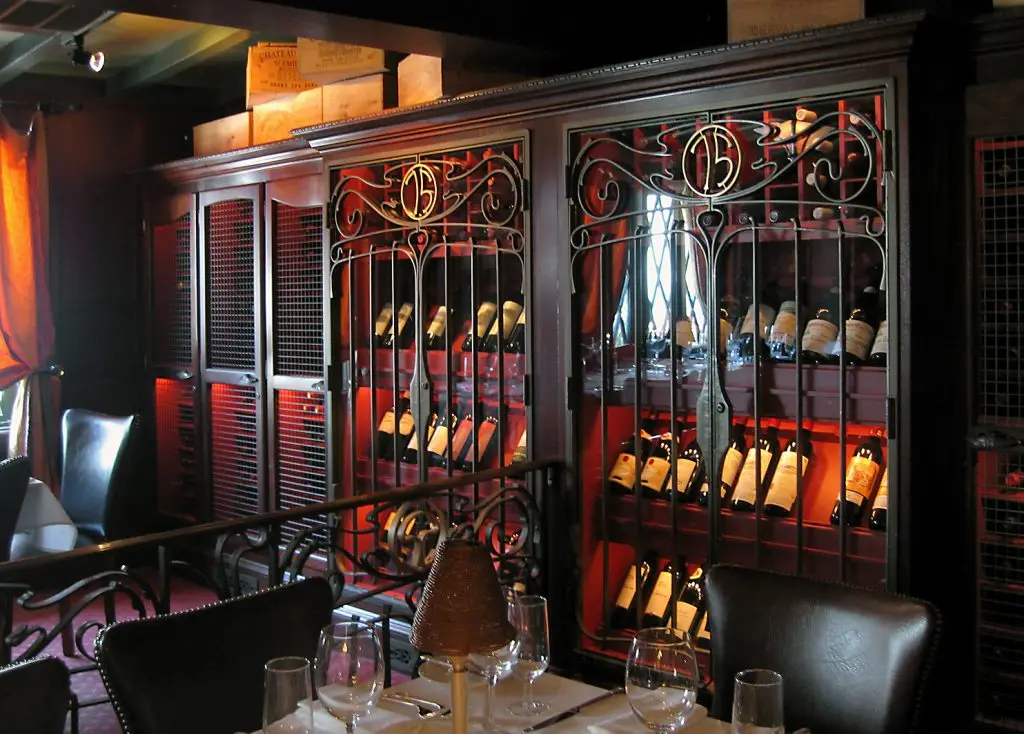
Bonjour Amis, I’m wearing my virtual beret this morning because over the years many have asked how I came up with ‘French 75’ as the name for what becamemy iconic, Bistro in Laguna Beach. Well, actually that was not the first name I was going to call it. Originally, it was going to be ‘The Snail Club’ as kind of a tongue in cheek name for a French Bistro. I even had a blade sign designed that would hang over the front door showing a snail with a burnished brass shell. However, my partner John Martin, who was the sitting CEO of Taco Bell at that time, didn’t think that was such a great name. In fact, in our years together as partners, having opened 9 restaurants together, it was the one and only time he ever insisted on overruling me on any decision…I’m glad he did. We were in the midst of our remodel so I needed to come up with another name quickly. One day I was asked by a Guest about how I got started in the business and what the first restaurant was that I had ever worked in. I was telling him the story about my first job at the very popular ‘Maxwell’s Plum’ in Manhattan and how I had lied my way into being hired as a captain where I opened wine and prepared Ceasar salads and steak tartare tableside for guests. I didn’t realize it at the time, but my 2 summers spent working there during my college years played a significant role in my ending up in this business. I’d like to share a little bit of history here in order to provide some context. Maxwell’s Plum was a flamboyant restaurant bar that operated in New York City from 1966 to 1988. Located on the Upper East Side, it was highly influential for its eclectic menu, Art Nouveau decor, and role in launching the 1960s “swinging singles” bar scene as it was widely considered one of the first and most prominent places to popularize the concept. It fundamentally altered the NYC social scene by merging dining, socializing, and casual mingling in a vibrant, relaxed setting. Owned by restaurateur Warner LeRoy (son of Hollywood producer Mervyn LeRoy), the space was famous for its kaleidoscopic stained-glass ceilings, glowing Tiffany lamps, and whimsical ceramic animals hanging from the ceilings. The expansive menu featured everything from gourmet burgers and chili to Iranian caviar and wild boar, even earning highly coveted stars from the New York Times. During its heyday, it was a massive magnet for the “in-crowd,” frequently hosting celebrities, artists, and notable figures like Warren Beatty, Cary Grant, Danny Kaye, and Barbra Streisand. The name itself was simply chosen on a whim by its creator, who wanted an offbeat, warm-sounding name that also included a food word. Anyway, I was sharing some of my stories with the guest, including my steak tartare ‘cookoff’. One lunch I had prepared several steak tartares and at the end of my shift the General Manager confronted me. Frenchman Jacques Alliman was an imposing 6’-4” version of Gerard Depardieu and he had noticed that I was not following the house recipe that I was taught. Naively, I responded that I had received numerous compliments on my version to which he said “Well, we shall see…you prepare your version, I will prepare mine and we will compare.” So, in the company of half a dozen waiters we did just that. After we finished Jacques took a taste of his version and then mine. He looked at the group and said “My version of zee tartare is very good…but David’s is better.” From that point on, every server came to me to prepare a tartar when ordered by a guest. My secret ingredient?… touch of A-1 sauce. Little did I know then that somewhere deep inside me it instilled the confidence in my own taste buds. So back to French 75, as I was telling this story I remembered another incident that was a lightning bolt that hit me at the time. One chilly and windy afternoon as lunch was winding down, I was waiting at the service bar for a bottle of wine a guest had ordered, when a tall, blonde bombshell walked into the restaurant and sat at the bar just a couple stools from me. She was dressed in fur, a gorgeous shimmering dress and dripping with jewelry. The bartender came over to her and asked her what she would like to drink. She said, “I’d like a French 75.” I remember thinking….OMG…that isthe sexiest sounding drink I have ever heard of. Well, that was it…when I remembered this incident, I had to call my new place French 75. But I wanted to do some research into the history of this drink and how it got its name. I discovered that in 1898 a modern new cannon was introduced by the French onto the battlefield. This 75-millimeter field gun was renowned for its speed, accuracy and explosive power. During the 1910’s, when military culture permeated everyday life, a potent new cocktail made with Cognac and Champagne was named after this beloved French weapon as it hit with the same force as being shelled by one. I wrote a back story behind almost every concept I developed and the one for French 75 was a nostalgic look back as a GI stationed in Paris remembering the little bistros and the beautiful French women….even the logo I had developed included an image of an old DC-3 right out of Casablanca. The finishing touch was the mural above the bar I had commissioned depicting a ‘Champagne War’ with naked cherubs and monkeys playfully shooting corks at each other. A guest once told me that they took it down when the restaurant closed…I sure would like to get it back. So, like Paul Harvey used to say…”And now you know…the rest of the story”. I hope some of you enjoyed reading this. Au